
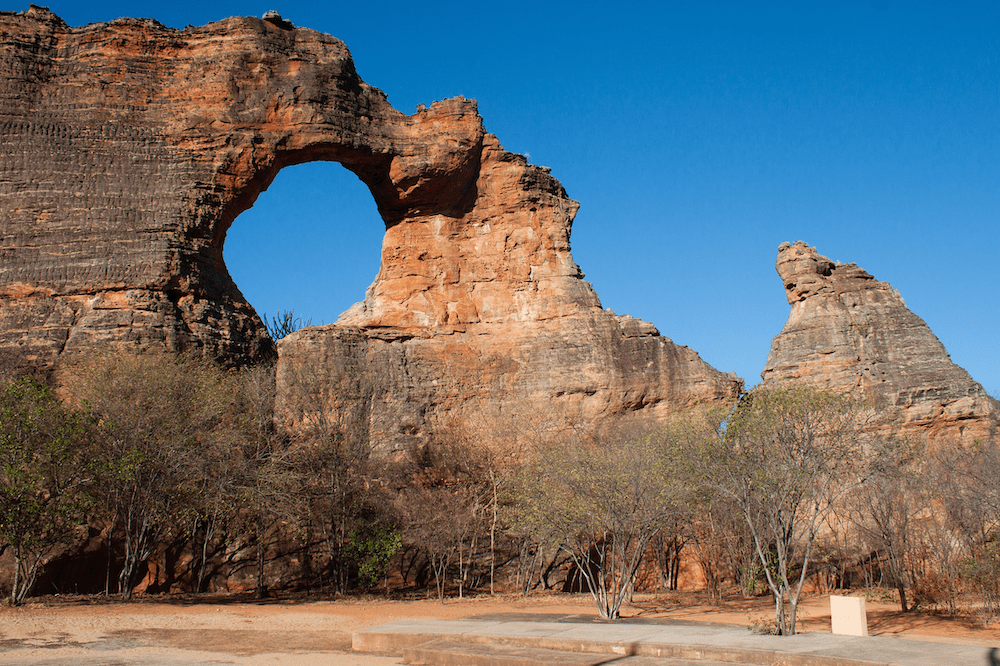
I recently listened to a Brazilian podcast about Niède Guidon, who passed away last June at 92 years old. She was a Brazilian archaeologist best known for her groundbreaking work in prehistoric archaeology at Serra da Capivara, in Brazil’s Northeast. Her discoveries helped establish the site as a UNESCO Cultural World Heritage Site in 1991.
The podcast transported me back over 25 years to when I visited Serra da Capivara National Park with my then-partner, a Finnish guy who spent five months exploring Brazil with me. We were both in awe of the ancient paintings and the raw beauty of the region. Even now, I can recall vivid details: the massive tarantula and rattlesnake we encountered, the relentless daytime heat giving way to surprising desert cold at night, our long walks among rocks painted in earth tones, and the incredible richness of it all—so isolated, so far from any major city.
Listening to that podcast brought a sharp realization: if Serra da Capivara were located anywhere else in the world, it would be one of the most visited archaeological sites on the planet. The park contains over 1,000 archaeological sites. One thousand. That’s not a typo.
The Journey There
Our adventure began with a flight to Teresina, the capital of Piauí state, followed by a 576-kilometer bus journey to São Raimundo Nonato, the gateway to the park. We camped right at the park entrance, and each evening we’d find a local family who would cook us traditional Brazilian meals—rice, beans, meat, and salad—while we sat together watching telenovelas on their small TV. The food was simple and absolutely delicious, and those shared meals remain some of my warmest memories from the trip.
Once in São Raimundo Nonato, we visited the Museum of the American Man. But this wasn’t your typical museum visit—buying tickets and strolling through organized exhibitions. The museum was closed due to lack of funding and visitors, so they opened it exclusively for us, turning on the lights and letting us wander through empty halls filled with incredible artifacts.
What Could Have Been
That experience reminds me of Drumheller, Alberta, and its world-famous Royal Tyrrell Museum. Both locations showcase extraordinary archaeological treasures, but Drumheller has the infrastructure and marketing budget that draws about 350,000 visitors annually. Meanwhile, Serra da Capivara receives only around 20,000 visitors per year—a fraction of its potential two million.
Beyond the Park
From Serra da Capivara, we ventured to Serra das Confusões, an even more remote destination. The moment we stepped off the bus, the entire town seemed to materialize around us—somehow, word of our arrival had spread. We ended up pitching our tent inside a “hotel” room because we were terrified that mice might fall on us during the night, or worse.
This journey took us further south into Bahia state, through the stunning Chapada Diamantina, Salvador’s colonial streets, pristine beaches, and finally to Rio. By the end, we’d covered over 2,500 kilometers by bus. It remains one of the most memorable trips I’ve ever taken in Brazil—a journey I’ll never forget.
The podcast about Niède Guidon reminded me not just of those incredible weeks of exploration, but of how much Brazil still holds that the world has yet to discover. Serra da Capivara deserves to be celebrated as the archaeological marvel it truly is.

 Helena artmann - life coach
Leave a comment