
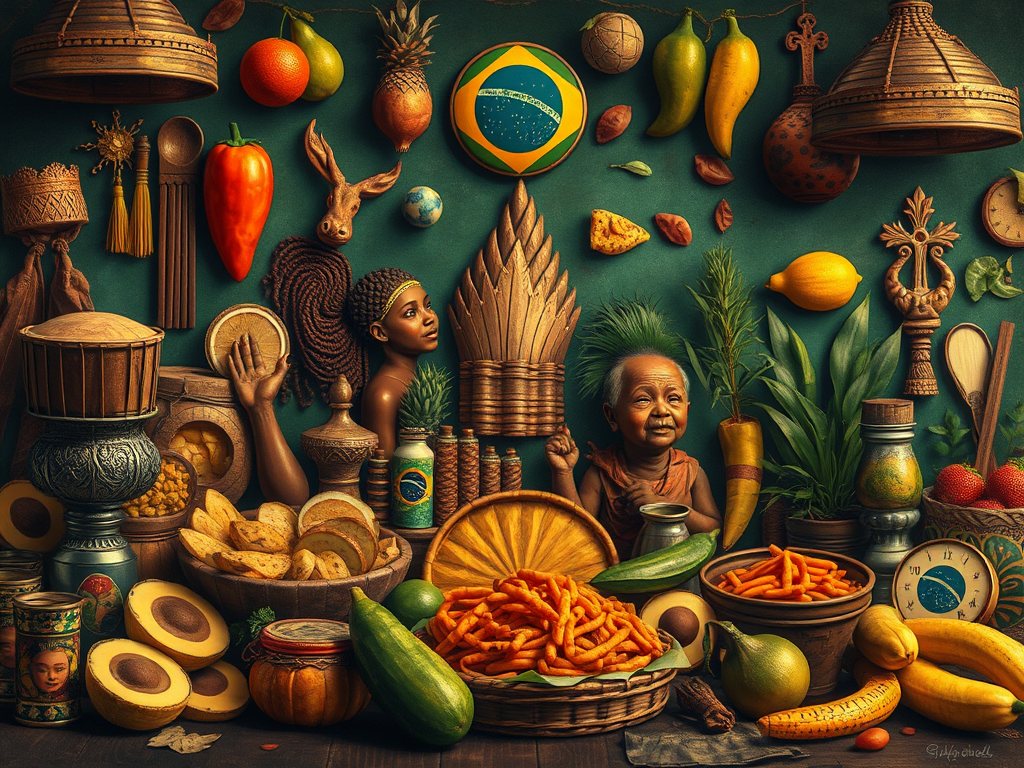
From time to time, I answer a prompt here and let it guide me through memories and feelings. Today, the prompt was:
What’s your favourite word?
Not too long ago, I listened to a podcast called Projeto Querino, and this opened up a door to Brazil’s fascinating, rich and sad history, which I knew very little about. A country with the majority of the population being Black, which has suffered and still suffers atrocious violence and racism, but has given us some of the most beautiful aspects of our culture.
Africans were brutally stripped from their country to become slaves in Brazil. And I love how they changed the meaning and the way people referred to them, saying that they were not descendants of slaves, but African kings and queens. What a beautiful way to reclaim who they really are!
But I am here to talk about words. I never understood exactly why our Brazilian Portuguese is so different from Portuguese from Portugal! I then heard stories about the languages we incorporated into our culture. On top of our rich African religions, incredible music, and delicious food, we also incorporated words from languages like Bantu (Kikongo, Kimbundu, and Umbundu) and the Niger-Congo language Yoruba.
Our best words come from Africa. The intellectual Lélia Gonzalez says we speak Pretugués (from preto, a word for Black).
The following list was copied from this article on El País; however, I have added a few words to it.
Vocabulary Categories: Hundreds of words were incorporated, especially in categories like:
- Food: Quitute, quindim, acarajé, moqueca
- Religious concepts: Mandinga, macumba, orixá, axé
- Music and Dance: Samba, lundu, maxixe, berimbau
- Body Parts and Conditions: Banguela, bunda, capenga
- Geography and Places: Cacimba, quilombo, senzala
- Clothing: Miçanga, abadá, tanga
Examples of Incorporated Words:
- Bunda: Meaning “buttocks”
- Cafuné: A term describing the act of caressing someone’s hair, from the Yoruba language
- Axé: A term for good energy or spirit, also the name of a Bahian musical genre
- Moleque: Meaning “boy” or “rascal”
- Quitute: A delicacy, often a sugary snack
- Chulé: Foot odor, a specific and informal term for “smelly feet”
- Dengo: Affectionate behavior or seeking tenderness
- Caçula: The youngest kid
- Quitanda: Small grocery store
- Miçanga: Beads
- Batucar: To drum

 Helena artmann - life coach
Leave a comment